Events, fairs, renewed partnerships and presentations: September was a busy month when it comes to sustainability in floriculture in France.
Maela Floch, Coordinator France
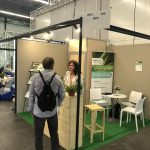
After being cancelled due to COVID-19 the last years, Salon du Végétal was back in Angers, and brought a great opportunity for companies from all the chain and growers to meet. MPS was present in a booth to explain growers and other visitors the MPS certifications as well as the HortiFootprint Calculator.
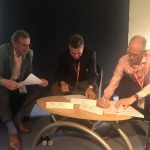 At Salon du Végétal, MPS also signed a new cooperation framework agreement with Excellence Végétale. Excellence Végétale is the association responsible for managing official or interprofessional certificates for the recognition of quality, origin and environmental sustainability in France. This agreement intends to develop synergies between horticultural certifications and to promote and support best practices in French companies. The first agreement between MPS and Excellence Végétale was signed in 2016 and since then great improvement has been made to develop certifications in France. This includes bringing the certification bodies for Plante Bleue and MPS-ABC into contact in order to conduct combined audits, the provision of MPS’ record-keeping environment for recording and the evaluation of usages for Plante Bleue HVE certification, the support for the dissemination and adoption of best practices, especially the joint organisation of a yearly Good Practices Day, which was held on 29 September this year.
This Good Practices Day, a yearly technical meeting, is open to all certified growers who want to take part. Every company, whether during the certification process or on a daily basis in production, faces questions about improving its production practices. How to limit its impacts, what changes to induce? The Good Practices Day has been created so that companies can speak generally on these themes, while relying each year on a specific theme proposed by producers. For this year, the theme ‘organic fertilisation’ has taken an important place in the discussions. The event took place in the Horticultural Production center for the Ville de Paris.
Coralie Petitjean, adviser from the CDHR Centre-Val de Loire (Astredhor network), recalled the operation of organic fertilisation, the principles of mineralisation, and the resulting necessary crop management: management of watering, pH, temperature, choice of growing medium, etc. Monitoring and anticipation are essential, at the risk of reacting too late to an excess or lack of nitrogen available for the crop. The results of tests carried out in stations and with growers on different crops have highlighted the importance for each company to gain its own experience, and of personalized support during the first years, with regular measurements of pH, conductivity, chlorophyll content, nitric and ammoniacal nitrogen content.
Marie Gantois, head of the Expertise, Soil and Plants division of the City of Paris, then presented the experimentations of the city on this subject. Trials have been carried out since 2018, with very different results depending on the crop. If the latter are rather encouraging with potted plants in greenhouses, the management of organic fertilisation in nursery potted plants seems more difficult to carry out. These trials are still ongoing, with, next year, new sources of fertilisers based on local opportunities: human urine and insect excrement. The discussions between participants were numerous, particularly concerning their own feedback on organic fertilisation, but also, in support of the 2021 usage trends & figures of MPS-certified companies, on cultural practices in a more general way.
The Good Practices Day also allowed the growers to learn about the news of Plante Bleue and MPS certifications. Thus, the evolution of the HVE standard, which will partly impact the Plante Bleue standard HVE level (level 3) have been detailed. The MPS input tool, offered to producers committing to Plante Bleue HVE certification, was also presented, as well as MPS’ latest innovation the HortiFootprint Calculator.
All in all, September was a very busy and flourishing month for MPS-France!