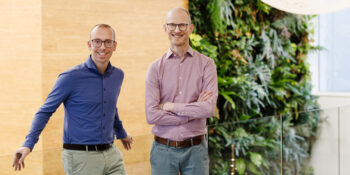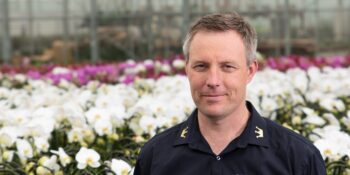
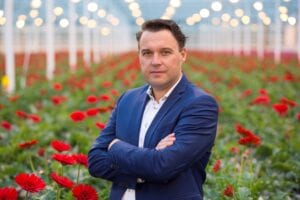
Arne Bac, sector specialist horticulture at Rabobank.
Sustainable leaders in Dutch greenhouse horticulture who are, for example, MPS-A + or MPS-ProductProof certified, can qualify for an impact loan from Rabobank. This is evident from the Vision for Agriculture and Horticulture 2030 that was published at the end of October. These frontrunners can apply for a loan with favorable conditions, such as an interest discount. “In this way, we hope that companies will still make that sustainable investment, because they will earn back the investment more easily because of the interest rate advantage,” says Arne Bac, sector specialist horticulture at Rabobank.
With the Vision for Agriculture and Horticulture 2030, Rabobank wants to help entrepreneurs with the transition to a sustainable business policy. In the coming years, six transitions will give direction to sustainable changes in Dutch agriculture and horticulture: demand-driven chains, circular agriculture, an area-oriented approach, climate transition, precision agriculture and horticulture and enhanced entrepreneurship. “Floriculture is also becoming more sustainable based on this philosophy. The environmental burden has to go down and we have to talk about who is most and least entitled to the environmental utilization space, ”says Bac.
Innovations
This year, Rabobank is offering one billion euros in impact loans to help make the Dutch floriculture sector, among other things, more sustainable. “By making the impact loan available to frontrunners, we hope to encourage the middle group to take the next step,” says Bac. But why not make the impact loan also available to the large middle group? “Ultimately, it is the front runners who come up with innovations. These innovations require a significant investment and that’s where the impact loan comes in. The past five years that the impact loan was available show that companies are investing more quickly in innovations with the help of this loan. Ultimately, the large middle group takes over the innovations. In this way we stimulate the middle group to adopt these innovations, which also improves their sustainability performance. ”
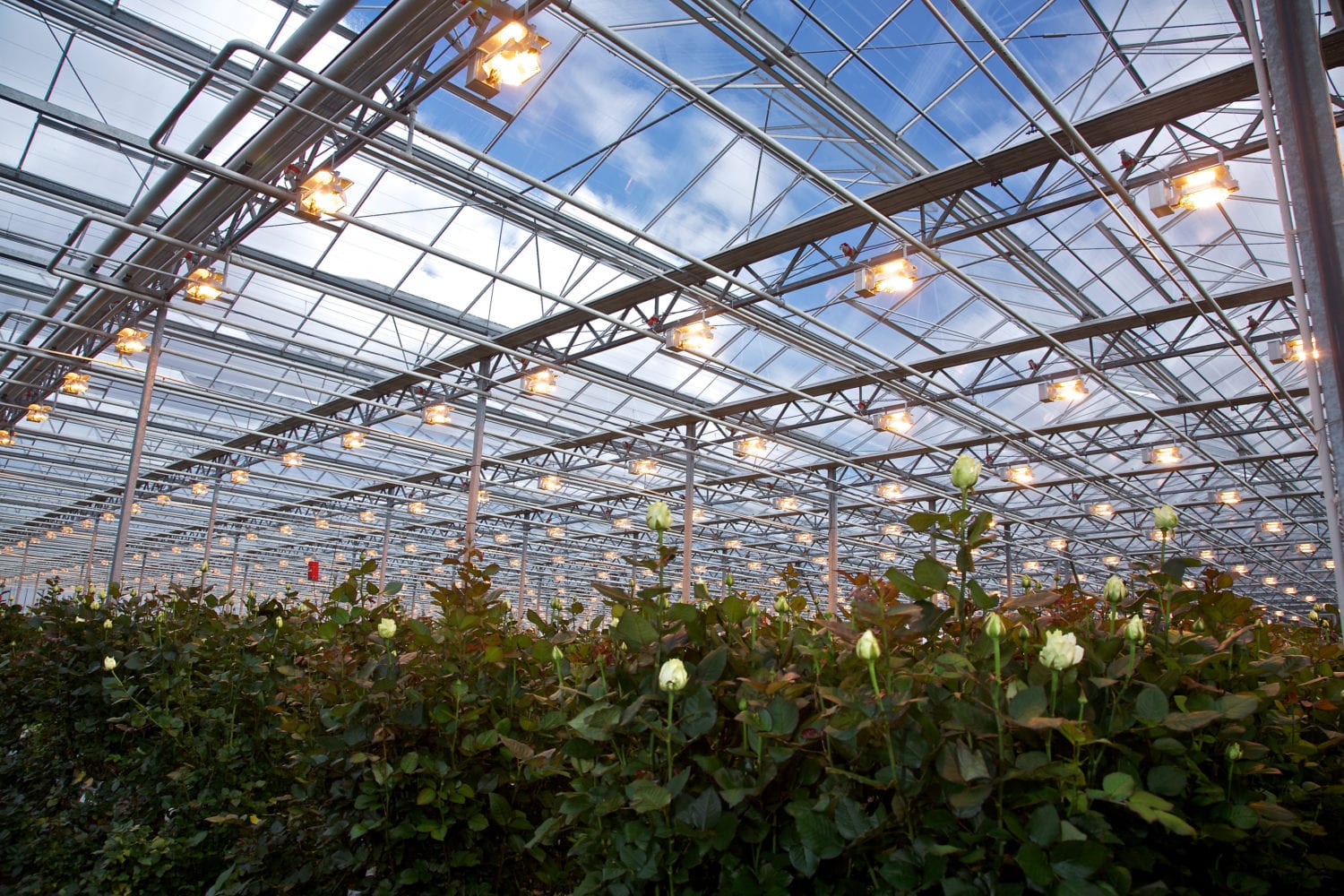
The Dutch horticultural sector is economically and socio-culturally important, but at the same time the sector is under pressure due to the use of environmental space. Not every sector is equally entitled to this space. Greenhouse horticulture is not soil-bound and has more options than, for example, arable farming to become more sustainable; after all, the cultivation of greenhouse horticulture does not take place in the open air, but in the greenhouse. Bac: “We hope that growers who are entitled to the impact loan, for example, build a new, sustainable greenhouse or that they reduce energy consumption via a dehumidification installation.”
Two reasons
Innovations resulting from “het Nieuwe Telen” (New Cultivation) also reduce gas costs, for example, so that the investment pays for itself quickly. The investment made by means of the impact loan must in any case become more sustainable. Bac: “We often see that growers have two reasons for the investment. The investment makes production more sustainable and on the other hand it ensures that production costs go down. ”