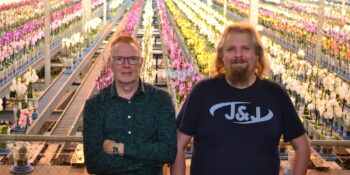
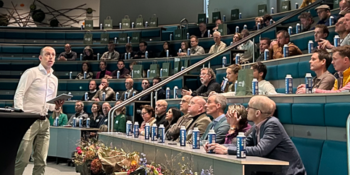
On 23 November, the annual meeting between MPS and Danish growers from Flora Dania took place in Funen, the heart of the Danish flowers and ornamentals industry. During the meeting, our Regional Coordinator Anne Krogh Larsen and Area Manager Maik Mandemaker provided insights into matters such as aggregated, historical usage by our Danish growers, and discussed several developments in sustainability. They also shared important insights with the growers about preparing for an audit.
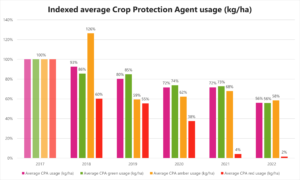 Because the vast majority of nurseries in Denmark have already been MPS-ABC certified for years, it is possible to identify trends in a significant portion of the Danish production market. For example, the average crop protection usage has almost halved in comparison with the benchmark year of 2017. In particular, the use of chemical crop protection agents (marked red in the MPS-MIND system) in 2022 was just 2% of the usage five years previously.
While the majority of our Danish growers specialise in pot plants, perennials and trees, Denmark is also home to a variety of experts in cut flowers. Company visits during the rest of the week once again demonstrated the impressive efforts our Danish growers have made towards working with organic crop protection, biostimulants and microorganisms. Other sustainable solutions included peat-free substrates, biodegradable pots, and efforts to reduce their carbon footprint and comply with CSRD legislation and FSI2025 targets. Aside from growers, we also visited our retail partners Coop i Danmark and ICA Gruppen, as well as a few of our traders, to further encourage cooperation in the chain.
It was a valuable, interesting visit that enabled us once again to both gain and share a great deal of knowledge. We look forward to next year!