Arnoud and Marloes van der Knaap of De Noordpoel nursery are fully committed to sustainability. Fortunately, they are not alone when it comes to achieving their ambitious goals such as using peat-free substrate and biological agents. And that isn’t only good for their business but also for the sector as a whole: “This enables you to cultivate goodwill with the consumer and puts the sector in a positive light.”
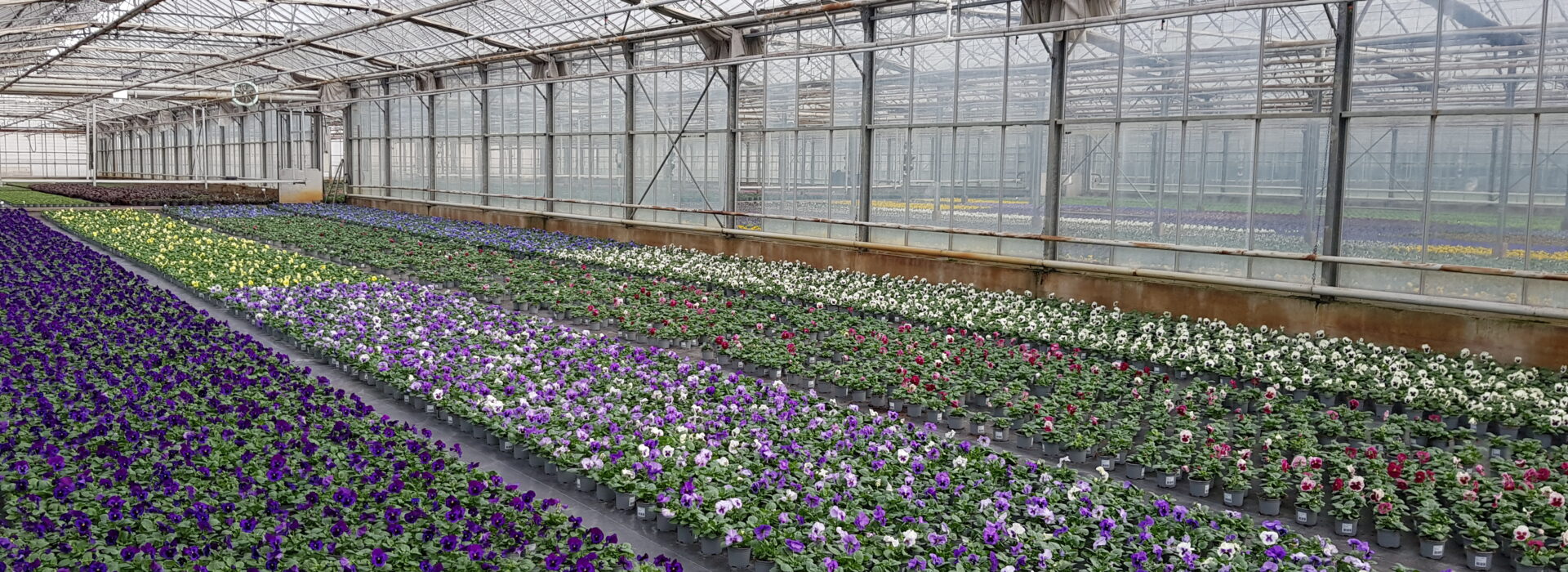
 De Noordpoel nursery is rooted in sustainability. As a school/university student, Arnoud van der Knaap was already running a nice little recycling business in used pots. After graduating, he and his younger brother set up a small nursery selling perennials. The business has since grown into an operation with six hectares of greenhouse space and an outdoor field. Arnoud runs the business with his wife Marloes, employing around forty people in the peak season.
Personal plant paradise
At the Royal FloraHolland trade fair in Aalsmeer, De Noordpoel nursery unveiled the new brand identity for the company and the brand they sell under: Garden Xperience. “Our mission is to create a personal plant paradise for every consumer, with masses of colour,” Marloes explains. “We supply our plants to various garden centres across the Netherlands. Our visually attractive perennials are also sold at garden centres, DIY stores and florists in many European countries via exporters.”
Recycled pots, peat-free substrate and green products
Sustainability is a top priority at De Noordpoel nursery. Needless to say, they use pots made of 100% recycled materials. But that’s not all: “We are currently running trials with suppliers of low-peat and even peat-free substrate,” Arnoud explains. “And because we harden off our plants in the greenhouse, with winter temperatures below zero, our gas usage is minimal.”
Another major advance in terms of sustainability is in their use of crop protection agents. “Neonicotinoids have gone completely, and our aim is to stop using any amber products so that we are only using green and white ones. The phase-out is proceeding quickly: it will be interesting to see how things work out for the crop one season down the line.”
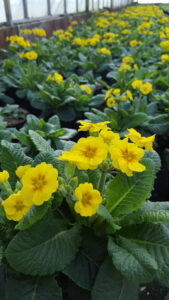 To make up for the products that are no longer available, they use biostimulants to boost plant resilience, along with biological controls. The latter can be something of a challenge: “Outdoors, the predators simply fly away, and we can only use them indoors when the temperature starts to rise in the spring. Because our outdoor field is a bit of a patchwork quilt with lots of small plots, we use localised control there.”
Arnoud adds: “When you cut down on crop protection agents you do get the occasional plant with a bug or a hole in it. But this presents the sector with a good opportunity to inform the consumer via the garden industry that less-than-perfect plants are actually a good thing, because it means that less or no chemicals have been used on them.”
MPS makes product usage transparent
Arnoud and Marloes van der Knaap feel supported by MPS in their efforts to use fewer chemical products. “They have a user-friendly tool that makes it easy to log your use of all products. You can use it to demonstrate to your customers that you are transparent in that area.”
 Besides being MPS-ABC certified, De Noordpoel nursery also has MPS-GAP certification. “That is more about processes,” Marloes explains. “It forces us to take a close look at our processes and motivates us to run our operations efficiently all year round.”
In addition, the nursery is looking at using the HortiFootprint Calculator to give them even more control options and reduce their footprint wherever possible. To coincide with the launch of the new Garden Xperience style, they also introduced biodegradable labels with bamboo sticks instead of plastic. In their planned new greenhouse they are aiming for energy-neutral crop production, aided by features such as solar panels, small wind turbines, heat pumps and extra screens. Further reducing the amount of peat in their potting mixes can also make a significant contribution to lowering their carbon footprint.
Transparency cultivates goodwill
When it comes to making their operations more sustainable, the nursery is not on its own. “We are working together with our crop advisor at Delphy, and we also have great support from MPS. The portal has been made easier to navigate, and we like the fact that you can export your overview directly to Excel for sharing with your crop advisor. There is just some room for improvement in the MPS-GAP environment,” Marloes notes.
Ultimately, it is important for the sector to become even more transparent. “That way, you can make sure you cultivate goodwill with the consumer in the future, and in doing so present the whole sector in a positive light,” Arnoud concludes. “The sector struggles with that sometimes. Certification and your carbon footprint can really help.”